Editor-in-Chief of Recent Progress in Science and Engineering

Dr. Mario Coccia is the Director of Research at the National Research Council of Italy (Turin, Italy). His main passion as a social scientist is to explain the evolution of science, technology, and social, economic and environmental change for human progress and development. He uses methods of inquiry mainly developed by sociologists, economists, engineers and evolutionary biologists to study the processes of scientific and technological evolution, and environmental, economic and social change. He investigates, by using statistical analyses, biological models, thought experiments, computer experiments and simulations, and conducting observational studies with interdisciplinary scientific perspective at broad spectrum between different disciplines, to explain the nature, primary causes and invariant evolutionary properties of human progress-driven by scientific, technological, socioeconomic and environmental factors. He has developed scientific research at the Arizona State University, Georgia Institute of Technology, Yale University, UNU-Maastricht Economic and Social Research Institute on Innovation and Technology, RAND Corporation, University of Maryland, Bureau d’Économie Théorique et Appliquée (France), Munk School of Global Affairs (University of Toronto, Canada), and Institute for Science and Technology Studies (University of Bielefeld, Germany). He has been a research scholar at the Max Planck Institute of Economics in Germany and a visiting professor at the Polytechnics of Torino and the University of Piemonte Orientale (Italy). His research publications include more than four hundred international papers in several disciplines on topics concerning dynamics of path-breaking innovations, emerging disciplines, and relations between economic, environmental and social change for human evolution over the long run. His H-index is higher than 112 (from Google Scholar in June 2024). Dr. Mario Coccia is on the list of the World’s top 2% scientists, 2022-2023 by Stanford University (USA) and he is a member of manifold international scientific societies.
Associate Editor of Recent Progress in Science and Engineering

Prof. Prasad Kaparaju has 22 years of research experience in Environmental Biotechnology, Bioprocess Engineering and Waste Management. His current research areas include biomass to biofuels conversion technology, anaerobic digestion, biomass pretreatment, biogas upgrading to bioCNG, biogas and biohydrogen production, and circular bioeconomy.
Prof. Kaparaju is the leading Australian researcher in anaerobic digestion and biogas/biohydrogen technology. He is the first researcher to demonstrate biogas production and upgrading the biogas to bio-CNG for vehicle fuel use in Australia, and was one of the first established researchers to initiate research on integrated biorefinery from lignocellulose biomass such as wheat straw. na.
Prof. Kaparaju is an active member of Bioenergy Australia and a Member of the Taskforce on Waste Management and Biogas in Australia. He has conducted several training programs in Renewable Energy Systems, Sustainable Energy Systems and Biogas Technology, and also facilitated workshops/seminars in biomass to bioenergy and anaerobic digestion technology.
Associate Editor of Recent Progress in Science and Engineering

Boris F. Minaev is currently the Professor of Chemistry and Nanomaterial Science Department at the Bohdan Khmelnytsky National University in Cherkasy, Ukraine. He was Head of Quantum Chemistry Department at Chemical Faculty of KarSU (1984-1989), Head of the General Chemistry Department at Cherkasy State University of Technology, Cherkasy, Ukraine (1989-2007), Head of Organic Chemistry Department at Cherkasy National University by Bogdan Khmelnitskij, Cherkasy, Ukraine (2007-2021).
He participated in many international and national research projects in the fields of organic synthesis and electronic structure calculations as the project leader and coordinator; and participated in many project evaluation as an expert: Expertise of 4 projects of the Swedish Research Council in 2008-2009, evaluation of Austrian, Romanian, Dutch national projects 2013-2021. Expertise of 32 projects governed by the Ministry of Education and Science in Ukraine during 2007-2024. Expertise of 6 projects governed by the National Research Foundation of Ukraine during 2022-2024.
His scientific interests include: Molecular opto-electronics and nano-photonics; Organic light-emitting diodes and dye-sensitized solar cells; Spin-forbidden transitions in molecular spectroscopy and in chemical reactions; Spin-catalysis concept and its implementation in heterogeneous and homogeneous catalytic reactions; Optical sensors; Bioimaging, photodynamic therapy; Spin-orbit coupling effects in spectra and chemical kinetics, molecular and ionic beams; Dissociative recombination, radiative association, absolute cross-sections and branching ratio; EPR, NMR, phosphorescence, microwave double resonance; Spin catalysis in photochemical reactions and its applications to quantum information nanotechnology.
Scientific Awards:
23.01.1986: Professor in Quantum Chemistry approved by the USSR Supreme Attestation Committee.
1999: Life achievements award from the American Biographical Institute for “The Singlet Oxygen Emission Theory”.
22.08.2012: The Honored Worker of Science and Technology of Ukraine.
28.01.2021: The Government of Ukraine Award: Order of Merit (III class).
Associate Editor of Recent Progress in Science and Engineering

A/Professor Farhad Shahnia received his PhD in Electrical Engineering from Queensland University of Technology (QUT), Brisbane, in 2012. He is currently an A/Professor at Murdoch University. Before that, he was a Lecturer at Curtin University (2012-15), a research scholar at QUT (2008-11), and an R&D engineer at the Eastern Azarbayjan Electric Power Distribution Company, Iran (2005-08). He is currently a Fellow member of Engineers Australia, Senior Member of IEEE, and member of the Australasian Association for Engineering Education.
Farhad’s research falls under Distribution networks, Microgrid and Smart grid concepts. He has authored one book and 11 book chapters and 250+ peer-reviewed scholarly articles in international conferences and journals, as well as being an editor of 6 books.
Farhad has won 5 Best Paper Awards in various conferences and has also received the IET Premium Award for the Best Paper published in the IET Generation, Transmission & Distribution journal in 2015. One of his articles was listed under the top-25 most cited articles in the Electric Power System Research Journal in 2015 while one of his 2015 journal articles has been listed under the top-5 most read articles of the Australian Journal of Electrical and Electronics Engineering. He was the recipient of the Postgraduate Research Supervisor Award from Curtin University in 2015 and the Australia-China Young Scientist Exchange Award from the Australian Academy of Technology and Engineering in 2016.
Farhad is currently a Subject Editor, Deputy Subject Editor, and Associate Editor of several journals including IEEE Access, IET Generation, Transmission & Distribution, IET Renewable Power Generation, IET Smart Grid, IET Energy Conversion and Economics, and International Transaction on Electrical Energy Systems and has served 40+ conferences in various roles such as General, Technical, Program, Publication, Publicity, Award, Sponsorship, and Special Session Chairs.
Farhad has led the IEEE Western Australia Section as the 2020-2021 Chair, and was the 2019 Founding Chair of the IEEE Western Australia Industrial Electronics Society (IES) Chapter. He was the 2023 Vice-chair of the IES’s Technical Committees on Smart Grids.
 Corrado I. Angelini, MD, Full Professor of Neurology, Senior Researcher at the University of Padova, Italy. His main interests focus on metabolic myopathies, such as glycogen storage diseases (especially GSDII), metabolic myopathies due to carnitine deficiency, PNPLA2 gene mutations and their consequences on autophagic flux and energy metabolism.
 Dr Keogh was awarded a Doctor of Philosophy (Ph.D.) from the University of Adelaide Australia for a thesis entitled “Nutrition and Vascular Health”. She holds a Master of Science (MSc) degree from the University of Melbourne, Australia for a thesis entitled Bone Mass and Body Composition in Adults: Effects of Liver Transplantation. Dr Keogh is Associate Professor of Dietetics and Nutrition at the University of South Australia (2010). She qualified as a dietitian from the College of Technology Dublin which is now the Technological University Dublin where she holds the title of Adjunct Professor. Dr Keogh was awarded a Fellowship of the South Australian Cardiovascular Research Development Program funded by the Heart Foundation and the Government of South Australia, March 2013 - March 2016. She also received The Commonwealth Scientific and Industrial Research Organisation’s Medal for Research Excellence in 2005. She is a member of the University of South Australia’s Alliance for Research in Exercise, Nutrition and Activity Research Centre. Dr Keogh had a career in clinical dietetics and held leadership positions at the Hammersmith and Queen Charlotte’s Special Health Authority in London, St. James Hospital London, the Royal Hobart Hospital, Tasmania, Australia and Ballarat Health Services, Victoria, Australia. She has a substantial scientific output with 150 peer reviewed publications to date, an h-index of 44 and 5934 citations (Scopus 2021).
 Calogero Caruso, formerly Full Professor of General Pathology, is Professor Emeritus at the University of Palermo, Italy. He graduated from the School of Medicine, University of Palermo, Italy, in 1971 (magna cum laude). He was founder and editor-in-chief of the journal Immunity & Ageing (2004-2018), and, as of July 2024, he is the author of 430 publications (18,487 citations), mainly on aging, diseases related to age and longevity, immunosenescence and immunopathology, indexed on Scopus (H index of 69). He has edited the book “Centenarians. An example of positive biology.” for Springer Nature and, with Prof. Giuseppina Candore, the book “Human Aging. From Cellular Mechanisms to Therapeutic Strategies”. In 2025, he edited the book *Role of Sex and Gender in Aging and Longevity* for Elsevier. He was the national coordinator of the Italian Ministerial Project on Centenarians and Longevity (2017-2020). He was Coordinator of the PhD program in Molecular Medicine and Biotechnology (formerly Pathobiology) (1998-2018). The national and international recognition of his scientific achievements in the field of Biogerontology is documented by funded projects, by the number of citations of his papers, by invitations to national and international congresses and meetings, by his activity as a project reviewer, and by the organization of international conferences.
 Professor Zhe-Sheng (Jason) Chen obtained a doctorate (Ph.D.) in Pharmacology from Kagoshima University, Japan. Dr. Chen also holds an MD degree from Guangdong Medical and Pharmaceutical College and a Master’s degree in Toxicology from Sun Yat-Sen Medical University, China. Currently Dr. Chen is a Professor at St. John’s University College of Pharmacy and Health Sciences. Dr. Chen is also the Director of Institute for Biotechnology at St. John’s University. He has published more than 200 scientific publications. Dr. Chen is the founding Editor-in-Chief for Journal of Cancer Research Updates and is also the Editor-in-Chief for Recent Patents on Anti-Cancer Drug Discovery and Journal of New Developments in Chemistry, as well as an editor of African Journal of Pharmacy and Pharmacology. He is an editorial board member of 26 journals and a reviewer of more than 250 peer-reviewed journals. As a consultant to pharmaceutical, biotechnology and health industry organizations, Dr. Chen commands invitations for more than 290 presentations, keynote addresses, and conference chairman. Dr. Chen is also a grant reviewer for the National Institutes of Health (NIH, USA), Chinese National Natural Science Foundation (China), the Genesis Oncology Trust (New Zealand), National Science Centre (Poland), the Government of the Hong Kong Special Administrative Region (HKSAR) Grant (Hong Kong, China), the Hungarian Scientific Research Fund (OTKA) (Hungary), the Netherlands Organisation for Scientific Research (NWO) (Netherlands), and the Czech Science Foundation (Czech).
 Professor Narayan S. Hosmane obtained a Ph.D. degree in Inorganic Chemistry from the University of Edinburgh, Scotland. Prof. Hosmane is currently a Distinguished Research Professor of Chemistry and Biochemistry and an Inaugural Board of Trustees Professor at Northern Illinois University, DeKalb. He received the coveted Humboldt Research Award for senior scientists twice. This award is presented annually, by Alexander von Humboldt Foundation, Bonn, Germany, to scientists worldwide as a tribute to their lifelong accomplishments. He was the founder of Boron in the Americas (formerly known as BUSA) and hosted the organization's first meeting in Dallas in April 1988. He has published over 300 papers in leading scientific journals and was ranked by the Institute for Scientific Information (ISI) in the top 50 percent of the most cited chemists in the world from 1981–1997. In September 2007, at the launch of the NRI Institute's Washington D.C. chapter, the NRI Institute presented him with its Pride of India Gold Award, in recognition of his outstanding accomplishments. That following January, he was honored by the same NRI Institute with its Lifetime Achievement Pravasi Award and Bharath Samman Medal during the Annual Conference held in New Delhi, India. A fellow of the Royal Society of Chemistry and the American Institute of Chemists, he has also been listed in Who's Who in the World. In June 2018, Narayan Hosmane was honored with a Special Dedicated Issue of Journal of Organometallic Chemistry, published by the Elsevier Science.
 Professor Roger Gläser received his Ph.D. degree in Chemistry from the University of Stuttgart in 1997. After a research stay at the School of Chemical Engineering of Georgia Institute of Technology, Atlanta, USA, he returned to the University of Stuttgart and completed his habilitation in Chemical Technology in January 2007. Since August 2007, he is a Full Professor of Chemical Technology and the Director of the Institute of Chemical Technology at Leipzig University. His research interests include the preparation and characterization of novel sorbents and catalysts with defined nanoporosity, aftertreatment of diesel off-gas by SCR-based technologies, the utilization of renewable resources, photocatalysis and diffusion in heterogeneous catalysis. He currently serves as dean of his faculty, head of the commission of the German Catalysis Society and head of the German Zeolite Association.
 Didier ROBERT is Professor in organic chemistry at the University of Lorraine and researcher in photocatalysis at the ICPEES (Institute of Chemistry and Process for Energy, Environment and Health-CNRS-University). He has initiated in 1997 the research area “heterogeneous photocatalysis”, which was little developed in France apart from in a few teams. Internationally recognized in this field, in 2009 he joined the ICPEES and the group "photocatalysis" of this UMR. His research focuses on the development and optimization of photocatalytic processes and materials, particularly nanomaterials, for environmental applications such as water and air treatment to eliminate emerging contaminants like volatile organic compounds, pesticides, and nanometric plastics. He is interested in both the fundamental aspects and practical applications of photocatalysis. For example, he studies the use of conventional semiconductors such as titanium dioxide (TiO₂) and novel nanostructured materials (La-CeO₂/ZnO, Bi₂O₃/TiO₂, CdS, C₃N₄/TiO₂, WO₃, etc.) to improve process efficiency under various illumination conditions (UV, visible light, solar light).
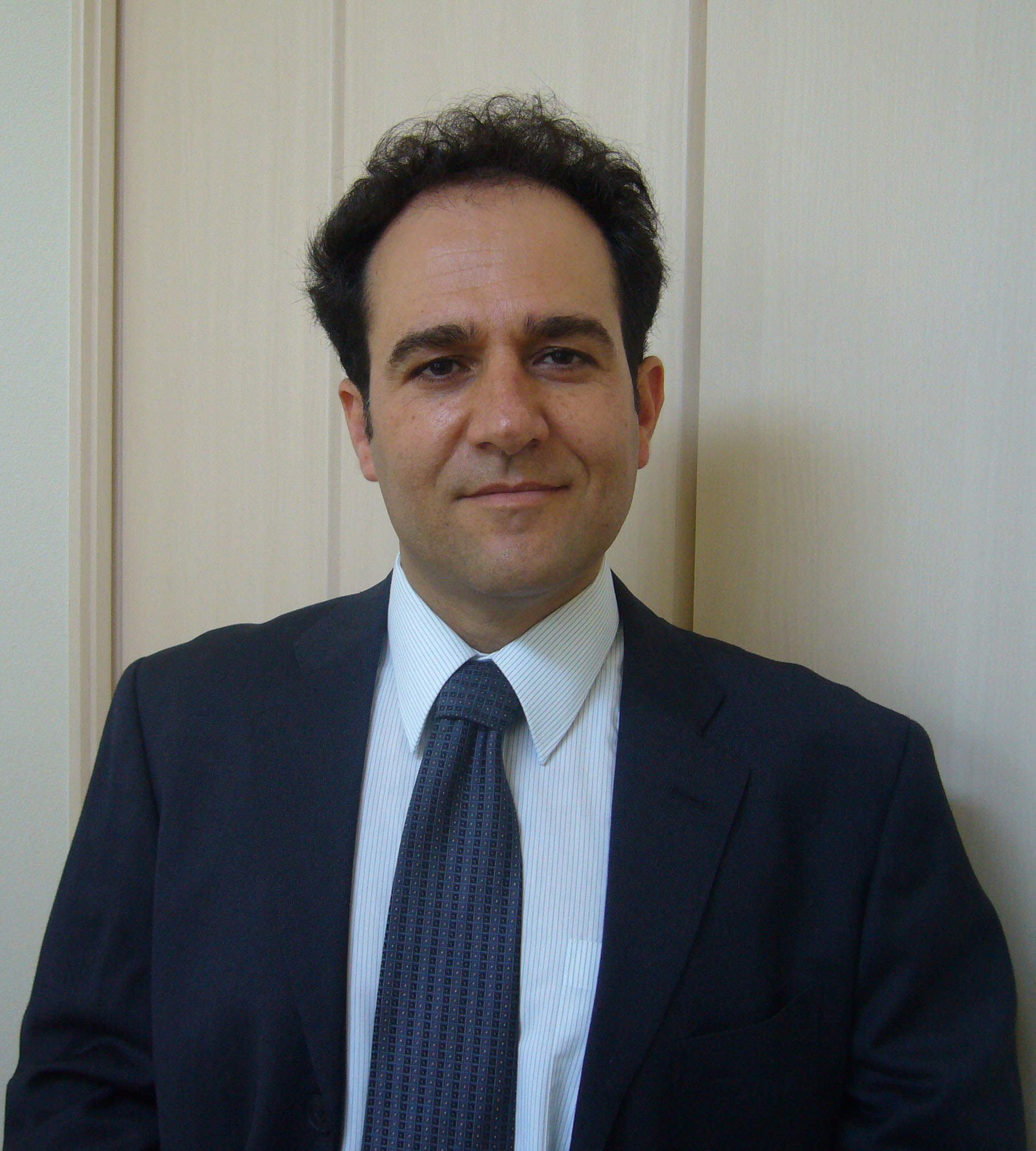 Dr. Hossein Hosseinkhani, Biomedical Engineer, has broad experience in life sciences and is an expert in nanotechnology, biomaterials, drug delivery, 3D in vitro systems, bioreactor technology, and bioengineering stem cells technology. His working experience is mainly attributed to academia and industry of biomedical engineering research and development (which includes several years of basic science research experience in a number of premier institutions related to the structure and function of biomaterials, and in polymer-based and mineral-based medical implants development in the medical device industry). He has been awarded several prestigious awards including JSPS (Japan Society for Promotion of Science) of Japan, European Marie Skłodowska-Curie Award, and Japanese ICYS (International Center for Young Scientists) Award. He authored more than 100 scientific papers published on peer-reviewed Journals, 5 books, and 10 book chapters (H-index: 46 Google Scholar). He is inventor of 16 National and International patents, several of which are licensed to companies acting in the biomedical fields and translated to 7 commercial products. He is the founder of Matrix HT, Inc., a world leading Biotech Company dedicated to healthcare technology to improve patient's quality of life. He is Editor-in-Chief of
  Professor Tek Tjing Lie of Auckland University of Technology (AUT) is a distinguished researcher in the field of electrical and power systems engineering. His research spans a wide array of topics, with a particular focus on energy management, optimization techniques, smart grid technologies, and renewable energy integration. Professor Tek Tjing Lie is Head of School of the School of Engineering, Computer and Mathematical Sciences, Auckland University of Technology (AUT). He received his BS degree from the Oklahoma State University, MS and PhD degrees from Michigan State University. His research interests are in the fields of Power System Operation and Control, AI Applications to Power Systems, Deregulated Electrical Power Markets, Renewable Energy and Smart Grids.
 Ass. Prof. Dr. rer. nat./ med. habil. / h.c. (YSU) Thomas Liehr is working in cytogenetics since 1991. He is head of the molecular cytogenetic group at the Institute of Human Genetics, Jena, Germany since 1998. Before he was coworker and PhD-fellow of the Herbert Quandt Stiftung der VARTA-AG at the Institute of Human Genetics, Erlangen, Germany. Concerning diagnostics, he signs out personally hundreds of (molecular) cytogenetic reports per year. Since 2002, he is clinical laboratory geneticist (Germany), and since 2015, ErCLG (European registered clinical laboratory geneticist. The results of his research are published in >15 books, >100 book chapter, >850 referred papers, and ~1000 abstracts. His particular expertise is development and application of multicolor-FISH probe sets for the characterization of marker chromosomes. He is specialist for the characterization of small supernumerary marker chromosomes (sSMC) and he collected all available literature on this special field on the freely available sSMC homepage. Also he received multiple prices, two invited professorships (see also http://cs-tl.de/).


 Zed Rengel earned his B.Sc.(Honours) and M.Sc. degrees from Zagreb University (Croatia), and PhD degree from Louisiana State University (USA). He is full Professor of Soil Science and Plant Nutrition at the University of Western Australia (since 2001). Zed supervised 42 postdoctoral fellows, and 39 PhD, 17 MSc and 46 Honours students, and hosted 66 visiting scientists from all over the world. Zed was awarded 9 prizes, 28 fellowships and awards, 4 Honorary Professorships and 5 Visiting Professorships. He gave 50 invited keynote addresses at international Conferences and presented 322 invited seminars at 78 Universities and Professional Societies in 28 countries. Zed is the author/co-author of 400+ publications in peer-refereed international journals and 46 invited book chapters. He edited 8 books and 6 Journal Special Issues. Zed is co-Editor-in-Chief of Crop & Pasture Science (Australia). His h-index is 66 (Web of Science, all databases).
 Juergen A. Richt received his Doctorate in Veterinary Medicine (DVM) from the Ludwig-Maximilians-University Munich and PhD in Virology and Immunology from the Justus-Liebig-University Giessen (1988), both in Germany. Afterwards, he completed three years of postdoctoral/residency studies at The Johns Hopkins University in Baltimore, MD, USA. Next, Dr. Richt returned for eight years to the Justus-Liebig-University Giessen as a junior faculty to establish his own research program. He later served for eight years as a Veterinary Medical Officer at the National Animal Disease Center (USDA-ARS) in Ames, Iowa.

 Tatsuo Kanda received a medical degree in 1991 at Niigata University School of Medicine, Japan, and his PhD in 1999 at Chiba University Graduate School of Medicine, Japan. He had post-doctor training for 3 years under Prof. Ratna Ray and Prof. Ranjit Ray at Saint Louis University, St. Louis, MO, USA. In Dec. 2008, Tatsuo Kanda became a Tenure-track Associate Professor at Department of Medicine and Clinical Oncology, Chiba University, Graduate School of Medicine, Japan. In Feb. 2013, Tatsuo Kanda was nominated a permanent Associate Professor at Department of Gastroenterology and Nephrology, Chiba University, Graduate School of Medicine, Japan. In 2017, Tatsuo Kanda became an Associate Professor, Division of Gastroenterology and Hepatology, Department of Internal Medicine, Nihon University School of Medicine. For ~25 years, he has focused his scientific interests on the topics related to liver diseases including acute liver failure, viral hepatitis and autoimmune liver diseases, and worked with Prof. Osamu Yokosuka. Tatsuo Kanda is also an expert for hepatitis A virus (HAV), HBV and HCV, and translation and replication of these viruses, and hepatocarcinogenesis. With his expertise in antiviral therapies and hepatitis virus research, Tatsuo Kanda also sees a lot of patients in clinical daily practice. Tatsuo Kanda has published more than 200 articles in peer-reviewed Journal.